|
Reverend G.U.Pope
George
Uglow Pope was born on 24 April 1820 in Prince Edward Island in Nova
Scotia. His family migrated to England when he was an infant. Even as a
child he cultivated many a language. He left for South India in 1839. It
was at Sawyerpuram near Tuticorin. "The Student of Tamil" bloomed
into a scholar of Tamil, Sanskrit and Telugu. Pope setup several schools
and taught Latin, English, Hebrew, Mathematics and Philosophy. As he was a
martinet he was always in trouble. Of him Bishop Caldwell said: "The chief drawback to his success was the
severity of his discipline which led, after a succession of petty
rebellions, to his withdrawal".
Pope believed in the theory: "Things have
tears". He worked with the motto: "Conscience within and God
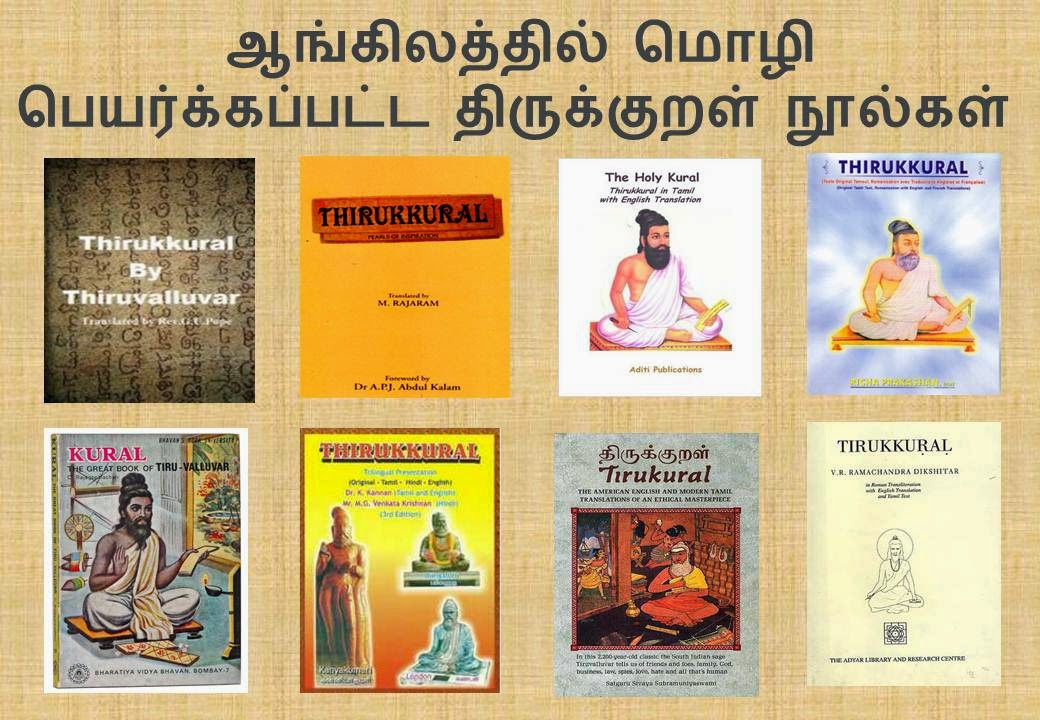
above". He completed his translation of Tirukkural on September 1,
1886. His "Sacred Kural" contains introduction, grammar,
translation, notes, lexicon and concordance. It also includes the English
translation of F.W.Ellis and the Latin Translation of Fr. Beschi. It is a
tome of 436 pages.
He had, by February 1893, translated Naaladiyaar. His
magnum opus, the translation of Tiruvachakam appeared in 1900. Of this he
says: "I date this on my eightieth birthday. I find,
by reference, that my first Tamil lesson was in 1837. This ends, as I
suppose a long life of devotion to Tamil studies. It is not without deep
emotion that I thus bring to a close my life's literary work".
The much coveted Gold Medal of the Royal Asiatic
Society was awarded to him in 1906. He passed away on 12 February 1908.
The services of this great soul to Tamil and Saivism defy reckoning by
weights and measures. In his last days he was a mature Saiva Siddhanti,
with his faith as ever rooted in Chiristianity. He delivered his last
sermon on May 26, 1907. What he himself felt about it, is extracted hereinbelow. It is reproduced
from the Light of Truth, Vol. VIII, February 1908, No. 11, page 327.
The Last Message from Rev. Dr. G.U.Pope M.A, DD
In forwarding us a copy of his last Sermon preached in Balliol College
Chapel on May 26,1907, with all best Christmas wishes, Dr.Pope wrote to us
as follows in his Autograph which will interest all Indian lovers of this
old Tamil veteran Scholar and Savant.
26 Walton Bell Road,
Oxford, Dec.25, 1907.
My dear friend,
In the heart of this my last sermon, lie truths that harmonize with all
that is best in Tiruvachagam and Siva-nyanam(Siva-gnana bodham).
I am very old. May the Father bless you and yours.
Ever truly your friend
G.U.Pope.
The best explanation of the Saiva Siddhanta doctrine of Mutti, or the
Soul's final emancipation from embodiment (erlosung von den weltlichen
banden-Seligkeit), is found in the treatise called Siva-piragacam by the
same great sage Umapathi(1.38, &c.) and has been translated(though from
a very imperfect MS.) by Mr. Hoisington(American Oriental Soc. Journal
1854). This is a commentary on the Siva-gnana-bodham. Mr.J.M.Nallasami, a
learned Saivite of Madras, has recently published a translation of
Siva-gnana-bodham, with valuable notes, which is a most useful compendium.
Ten faulty (or imperfect) theories of this consummation, so devoutly wished
for by all Hindus, are enumerated in these works, or in the commentaries on
them:-
(1) There is the bliss aspired to by the Lokayattar ('Worldlings'. This is
simply grosss sensual enjoyment in this world. These heretics are
continually attacked in the Siddhanta books.(see Sarva-darcana-sangraha
(Trubner's Series).) They were atheistic Epicureans, followers of Charvaka
(Note XIV).
(2) There is the cessation of the five Kandhas. This is the Buddhist
Nirvana, and is always considered by Tamil authors to be mere annihilation.
The South-Indian view of Buddhism is illustrated in Note
IX(Sarva-darcana-sangraha, p.31).
(3) The destruction of the three(or eight) qualities is pronounced to be
the final emancipation by some Jains, and by the teachers of the atheistic
Sankhya system. This would reduce the human Soul to the condition of an
unqualified mass, a mere chaos of thought and feeling.
(4) There is the cessation of deeds by mystic wisdom. This is the system of
Prabhakara(Sarva-darcana-Sangraha, p.184). The deeds mentioned are all
rites and services whatsoever. The devotee becomes in this case, so the
Saivite urges, like a mere image of clay or stone.
(5) 'Mukthi' is represented by some Saiva sectaries as consisting in the
removal from the Soul of all impurity as a copper vessel is supposed to be
cleaned from verdigris by the action of mercury. There is a good deal of
abstruse reasoning about the pollution aforesaid. 'Copper is not really in
this sense purified by the removal of the green stain on its surface; the
innate weakness of the metal is in its constant liability to this
defilement. Gold is never coated by such impure matter. Copper will always
be so; it is, as it were, congenital. Now these sectarians preach that, by
the grace of Shivan, the innate corruption of the Soul may be removed, from
which will necessarily follow permanent release from all bonds'. This seems
to resemble very closely the Christian idea of the sanctification of the
souls of men by divine grace infused. The Siddhanta, however, insists upon
it that for ever, even in the emancipated state, the power of defilement,
the potentiality of corruption, remains(i.e. 'Pacam is eternal'). This
corruption cannot, it is true, operate any longer in the emancipated
condition: but it is still there,-dead, unilluminated, the dark part of the
Soul, turned away from the central light, like the unilluminated part of
the moon's orb. Personal identity, and the imperfections necessarily
clinging to a nature eternally finite, are not destroyed even in Mutti.
(6) Another class of Saiva sectaries taught that in emancipation the body
itself is transformed, irradiated with Shivan's light, and rendered immortal.
This system supposed that intimate union with shivan transmuted rather than
sanctified the Soul.
(7) There is then the system of the Vedantis, who taught that the absolute
union of the Soul with the Infinite Wisdom, its commingling with the Divine
spirit, as the air in a jar becomes one with the cirumambient air when the
jar is broken, was Mutti. But here personality is lost.
(8) The doctrine of Palkariyam(followers of Bhaskara) is, that in
emancipation there is an absolute destruction of the human Soul, which is
entirely absorbed in the supreme essence.
(9) There were some Saivities who taught that in emancipation the Soul
acquires mystic miraculous powers; that in fact, the emancipated one is so
made partaker of the divine nature and attributes, that he is able to gain
possession of and exercise miraculous powers, which are called the eight
'Siddhis'. Persons professing to wield such magical powers are not
unfrequently found in India, and there is in them very often a bewildering
mixture of enthusiasm and fraud.
(10) There were also some who taught that in emancipation the Soul becomes,
like a stone, insensible. This stationary, apathetic existence, if
existence it can be called, is the refuge of the Soul from the sufferings
and struggles of embodiment.
In opposition to all these faulty theories, the true doctrine of
emancipation is thus defined: When the Soul, finally set free from the
influence of threefold defilement through the grace of Shivan, obtains
divine wisdom, and so rises to live eternally in the conscious, full
enjoyment of Shivan's presence, in conclusive bliss, this is EMANCIPATION,
according to the Siddhanta philosophy. (See T.A.P.75 in NOTE VI).
|
|
I. Shanmuganathan (Nathan) Former Editor Thinathanthi),
1999
"G. U. Pope's life has captivated me most among the several blessed
Tamil savants I read about. Born an Englishman, this great personality
breathed Tamil and felt like a Tamil. G. U. Pope was born on 24-4-1820 in a
hamlet in Edwards Island in the Canadian neighborhood. He came to Tamil
Nadu as a Christian missionary in 1839, and lived in the service of Tamil
and very early, he was highly influenced by the excellence of the Tamil
language. He published such great works as Tholkapiyam. Nannool, and made
classical Tamil easier to English students, while Tamil students could
afford means for a more comprehensive and fruitful study of the classics.
He translated into
English, Thirukkural, Naladiyar, Thiruvasagam, etc.
Thirukkural was translated into other languages before Pope. English
translators did only partial translations. Rev. Pope deserves the credit
for researching and producing a noteworthy full translation of Thirukkural
. He spent a greater part of his fortune to publish rare Tamil books.
In his Preface to the English Publication of Thirukkural, G. U. Pope wrote
on the excellence of Tamil:
"Tamil is a sophisticated unique language, with a rich vocabulary. It
is the mother of all South Indian languages, Tamil literature was designed
to create high moral standards, ethical codes and Thirukkural is a great
example of that. It is in a land of people with very high ethical codes and
who nurture human discipline that such moral books are created and could be
created. Thirukkural is as clear as an unpolluted spring. Yes! Thirukkural,
the unique book, has come to remove the impurities of this world. 'Within a
short time of my learning Tamil, I commenced translating Thirukkural , for
the benefit of Europeans. It took several years to complete the translation
and I offer my gratitude to God for the final result."
Pope's love for Tamil and Thirukkural is abundantly clear from such
expressions. Pope returned to England in 1882, having lived in Tamil Nadu
for approximately 42 years. He accepted a Professorship at Oxford
University, to teach Tamil and Telugu.
He received the coveted Gold Medal given once in three years for
meritorious service and to mark the Diamond Jubilee of Queen Victoria in
1906. He wrote to the editor J. M. Nalla Samy Pillai of "Siddhantha
Deepika" on October 20, 1900, requesting that after his death, the
inscription on his headstone should be "A Tamil Student" - and at
least a portion of the cost to erect such a headstone should come with
donations from wealthy and influential Tamils."
Pope died on February 11, 1908. Professor Selvakesavaraya Mudaliyar, of the
Tamil Department of Chennai Pachchayappan College, collected funds
according to Pope's last wish and dispatched to London towards the
headstone.
What is happening to the Tombstone? Many of us cherish the idea of visiting
this tombstone if we got a chance to go to London. M. P. Somasuntharam
(Somu) " the well known writer, All India Radio fame for many years,
and the successor to editor KALKI at "KALKI," was able to locate
where Pope was buried in 1961 and paid his respects.
M. P. Somu wrote in his book 'akkaryc cImy" as follows:
"My several inquiries regarding the exact location of Pope's tombstone
in Oxford from several of my friends in London came out blank. During my
search in a book on Englishmen of great achievements, I learnt that Pope
was buried in the Saint Sepulcher Cemetery on an old street called Walton
in Oxford. I chose the holiday a Sunday to visit the site. Young M.
Gopalakrishnan accompanied me. We reached Oxford around 12.00 noon. Finally
we reached the Saint Sepulcher Cemetery, from direction given on our
request, only to find the two gates were locked. It was a great
disappointment. We approached a cigarette vendor across the street for
information. An old lady was taking care of business. She sensed our
sadness from our demeanor, told us with great affection, "Friends! I
sympathize with you. They have closed the cemetery now. There are 4000
tombstones here and interment of 12,000 bodies. They have closed this place
for lack of any more burial grounds."
Just imagine my disappointment at such news. "Friends", the
gentle lady advised. I can understand from your sadness, one of your
forefathers is buried here. Do one thing; the Cemetery caretaker lives at
the entrance to the cemetery. Tell him that you have come to pay respects
to one of your forefathers and see what happens."
We got permission from the caretaker to enter the cemetery, having spoken
thus, "The one sleeping under is not only my forefather; but also
forefather to every Tamil and every South Indian."
It was not an easy matter to identify Pope's tomb from among 4000 of them.
Since the cemetery was not in use, there was neither a Register nor a list
of the tombs. M. Gopalakrishnan and I went in two directions looking for
Pope's name. The caretaker joined us in the search.The learned Pope's soul
must have taken sympathy with our quandary.
Because, from a bush in some remote corner of the cemetery the caretaker
shouted "Pope." We ran to the spot in the front entrance to the
right, below a yew tree, covered with dense vegetation was a large brush.
Under which a marble slab, once the bush was cleared, showed very faint
inscription. We dipped our handkerchief in the water Gopalakrishnan fetched
in a vessel, and started rubbing the slab. The following inscription showed
very clearly:
"George Uglow Pope D.D. of South India sometime lecturer in Tamil and
Telugu in the University and chaplain of Balliol College, Oxford, born 24th
April 1820. Died 11th February 1908. This stone has been placed here by his
family and by his Tamil friends in South India in loving admiration of his
life long labours in the cause of oriental literature and philosophy"
I was excited reading these words! It was not Pope's family alone that
erected this tombstone. I read that written portion that said his friends
from South India over and over again. The mere mention that he was a South
Indian and Tamil donations were also involved in erecting the tombstones
are words that should be engraved gems in Tamil history, don't you agree?
It is on those very words; jungle bush is spreading now!His wife is buried
next to him.
Goplakrishnan and I, on behalf of Tamils, paid our homage to both while
circling the tombs in our typical Tamil fashion. The caretaker watching us
developed a renewed devotion. He also paid his respects in the Christian
tradition.
"My friend! Please do not let the bush spread on this tomb. This is
the tomb of one of our forefathers. There are thousands of us, his
progenies, living in South India. Future visitors to this site should not
go through the same ordeal we have gone through. From time to time smear
with oil and keep these letters shining. You will be blessed for your good
deed. My fellow countrymen will be grateful." With these words, we
also showed him our appreciation." These are Somu's words."
|
|