Showing posts with label pondicherry heritage. Show all posts

Sunday, October 14, 2018

TAMIL FOLK DANCES : KAALI ATTAM : PONDICHERRY GNARARAJ EXCELS


THE DANCE OF GODESS KALI 

N. Nandhivarman  : New Indian Express: 25th June 2005

When nations emerged out of societies of strife, the concept of Motherland and Fatherland emerged, denoting the two trends of social living. In matriarchal societies, women warriors were common. They fought forces of evil. These warriors were later personified as goddesses. We can see such goddesses in almost all primitive societies. In India the goddess Kali has a nationwide appeal. In Tamil villages we have Kali temples everywhere. Mari Amman temples and Kali temples are most common places of worship in our society. 

Maari in Tamil means rain, thus the worship of rain Goddess was common in water starved Tamil Nadu. Goddess Kali is also known as Kotravai in Tamil, a fierce protector of the good versus evil. Tamil culture, which inclines towards musical or dance forms in every walk of life, sees Kali Attam as one of the interesting forms of practice. Kali worship was beautifully spelt by Swami Vivekananda in a poem titled Kali The Mother A thousand, thousand shades Of Death begrimed and black Scattering plagues and sorrows, Dancing mad with joy, Come, Mother, Come! For terror is thy name Death is in thy breath And every shaking step Destroys a world forever Thou ―Time the All-Destroyer Come O Mother Come The dance of Kali is a dance of destruction against forces of evil. And in portrayal of such dances masks are used.

The mask culture, dating back to the Pre-Historic rock paintings of 3000 BC, has traveled down the ages. Terracotta masks (2500 BC) were found in the Mohen-ja-daro excavations. Bhutan has fearful masks of animal spirits. There is a strong belief in masks belonging to souls of 215 ancestors amongst rural population. Mask dancers who propitiate the spirit, in a state of trance give manifold blessings to the gathered devotees. Masks of Siva and Durga are powerful iconic masks in India. In modern India, mask dances at theatrical and ritualistic levels are thriving well. Many stage artistes and performers have been practicing these dances and they specialize in the forms that are of interest to them.

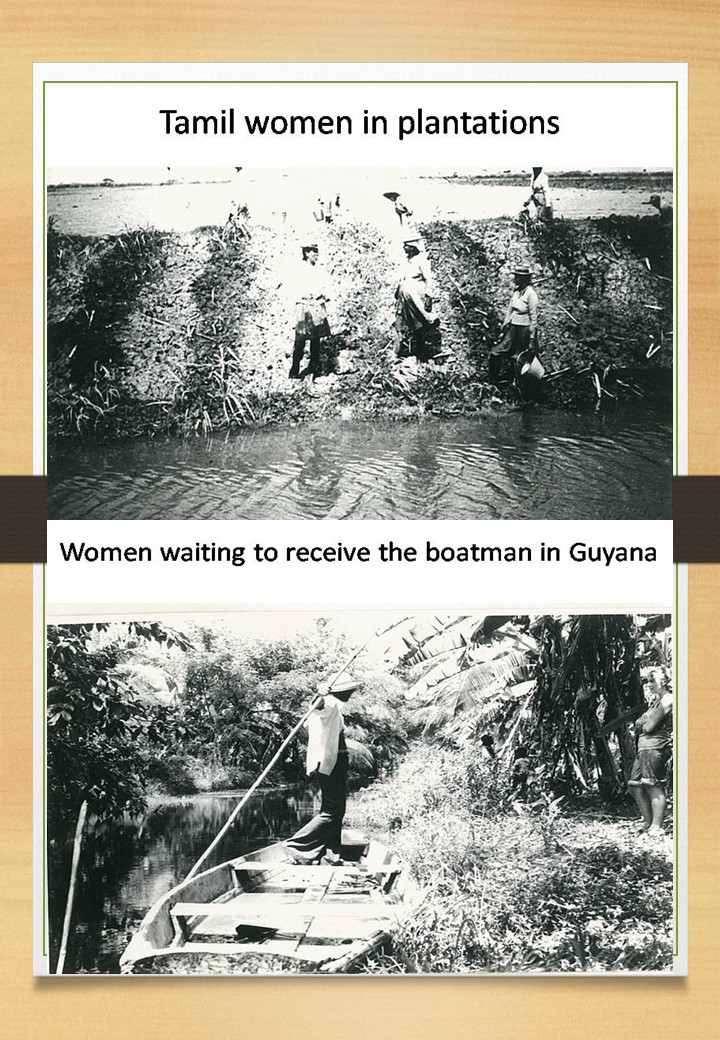
Gnanaraj hails from a traditional family of artistes who have been performing for eight successive generations. Gnanaraj has skills to perform Karagam, Kavadi, Silambu firepot – dance and tiger-dance. This back-ground helps him in performing Kaaliattam, in which he excels. Gnanaraj alias Kuppusamy has many performance to his credit. Of particular mention is his participation in the 150-year celebrations of the arrival of Indians as indentured labourers to Gayana, which was celebrated in May1989 ―The performance of this troupe of 17 artists from Pondicherry was of high calibre and it was much appreciated by the Guyanese audiences including President of the Cooperative Republic of Guyana, ―says a communication from High Commission of India. 

Tamil artistes have won recognition from all over the world. An example is LR Krishnamithra who stands on a clay pot or glass tumbler and rotates it while dancing. These rare performances and talented artists bring fame to Pondicherry. South Zone Cultural Center of Tanjavoor and Arts and Culture Department of Pondicherry have commonality to the Tamil audience by inviting artistes from other states and introducing artistes like Gnanaraj to other states. 

VILLISAI VENDHAR PATTABIRAMAN THE NOBLEST PONDICHERRIAN


[Villisai Vendhar Pattabiraman conferring Dravida Maamani Award on A.Vanthiyathevan, Mrs.Umamaheswari Vanthiyathevan and N.Nandhivarman in picture ]

To preserve Villupattu, a folk art form a school girl danced at a public function. 
The next day she is bound to receive a surprise mail appreciating her dance. Soon after a state honour has been conferred on a scholar a mail lauding his work will land in his house. Yes, there is one person in Pondicherry who rejoices at everyone‘s achievement. This trait of 73- year –old Kalaimamani Pattabiraman has earned him a unique place in people‘s minds. Working to preserve the folk art, Villupattu, Pattabiraman has injected into its contents government schemes like family planning and maintaining a clean, hygienic environment. 


This multifaceted poet and singer also teaches French to those who aspire to learn. Mr. Qureshi, from Maharashtra, who picked up French with ease under the guidance of Pattabiraman was deeply impressed by his teacher and openly lauds him as ―living, eternal example of simple living, high thinking, and effective, practical teaching.‖ Pattabiraman is known for his Villupattu. The title Villisai Vendar conferred on him speaks about his zeal in preserving this folk tradition for the past 36 years through his tireless performances. The greatness of Tamil music lies in converting even stone pillars into musical instruments. Playing on a bow shaped instrument the singer narrates a story in songs interwoven with prose, along with messages and morals for society, creating a melodious and pleasant musical story that came to be known as the Villupattu. 

In his book, History of South Indian Carnatic Music from Vedic Times, Rangaramanuja Iyengar states, ―The basic culture of the peninsular South is that of the Tamil language and its civilization. It is reflected in every 200 aspect of life in the three regions of Andhra, Karnataka and Kerala. Carnatic music is the common heritage of the entire region. Though the major contribution came from Tamil there is no conflict in theory or practice. Ipso facto the instinct to draw music out of even granite is in evidence all over the South. This last line deserves special mention and attention. The greatness of the musical achievement of the Dravidian states deserves world recognition.

To extract music out of stone is one of the note worthy cultural gifts for which we owe our thanks to sculptors. In the Kumbakonam Kumbeswarar temple, and at Azwar Thirunagari, we can find a ―Nadasawaram‖ made out of stone. The pillars of temples situated at Azaharkoil, Madurai, Azhwar Tirunagari, Tirunelveli, Susheen diram, Kalakkadu, Tiruvananthapuram, Tirupathi, Tadipathri, Lepakshi, Hampi and many other places of the South are capable of echoing musical notes. 

Haling from such a rich culture and legacy, it will not be surprising to find weapon shaped musical instrument indicating the inner urge of a highly civilized society that wants weapons too to eschew violence and produce music. The traditional musical instrument of the Tamils was yazh and the singers of that instrument are known as Yazpaanar, and Yazhpaanam is a territory in Sri Lanka. There were 18 kinds of ‗Yazh‘that prevailed for centuries all over the region. Yazh is a musical instrument that was popular even from the pre-historic period. Vipulananda Adigalar in his ―Yazh Nool‖ mentions a variety of yazh known as Villyazh, i.e. yazh made in the shape of a bow. Villyazh had strings but the later day Vill did not have any string. Justice Maharajan, a renowned Tamil scholar, mentions Sathur Pichaikutty as one who laid the foundations for the emergence of Villupaatu. 

The great comedian Kalaivanar N.S Krishnan popularized Villu pattu and the story of Gandhi Mahan in villupaatu performed in radio by him deserves 201 special mention. There are some more noteworthy artistes like Kuladeivam Rajagopal, S.S.Rajendran, Sevalkulam Thangayya, Nelvalai Narayanadas, Mamsapuram Baludravidan, Madathur Arunachalam, Selliah, Kovai Muruganantha Bharathy,Kanchipuram Panjatcharam, and Muthu Ganesan as mentioned by Villisai Venthar Pattibiraman in his book Isai Thantha Isai. The high pitched voice of S.S. Rajendiran, known as Latchiya Nadigar [Actor with Ideals]. and his dramatic talent created an everlasting impact on Kalaimamani given by the Government of Pondicherry. The South Zone Cultural Centre, which wanted to promote this folk art, has accepted Pattibiraman as a traditional guru and provides Assistance. The high pitched voice of S.S Rajendiran, known as Latchiya Nadikar [Actor with Ideals] and his dramatic talent created an everlasting impact on Kalaimamani Pattabiraman who started to tread in his footsteps. It has earned him many awards like the Kalaimamani given by the Government of Pondicherry. The South Zone Cultural Centre, which wanted to promote this folk art, has accepted Pattabiraman as traditional guru and provides assistance. He also has many books to his credit. Varumaiyai Ozhippom., Padithan Parungalen, Vaarungal Malaysiavuku, Pillaigale Ungalukkaga and Sathigal Illaiyada are some of his books. A teacher who won the National award for the best teacher from then President R Venkataraman in 1986, he is spreading this folk art under the guru-shishya parambara scheme. His voice can be heard in most of the government and school functions here.Yet his humanistic nature, the abundant love he has for his kinsmen and the social concern that finds expression in his poetry have won him many friends who call him the noblest citizen of Pondicherry. 

Courtesy: New Indian Express: 11th September 2004 : N.NANDHIVARMAN

Friday, September 21, 2018

POETS PROTEST TO AWAKEN OUR TAMIL MEMBERS OF PARLIAMENT :2002


POETS MEET TO AWAKEN MEMBERS OF PARLIAMENT FROM SLUMBER

A novel kind of protest by the Poets and Tamil scholars of Pondicherry disturbed the lethargy of our political class and it left an imprint on Tami lhistory pointing an accusing finger at the Parliament Members of Tamil Nadu, with an exception of a few, for their utter failure to stand united on the issues pertaining to Tamil Nadu in the floor of the Parliament. This protest also charged the political parties for not giving a free hand to the members of parliament to raise issues of concern to Tamil Nadu and also had a dig at the parties for not choosing competent persons to represent their constituencies.

The poets of Pondicherry were brought under an umbrella to air their poems in a THERU MUNAITHIRUPALLI EZHUCCHI organized jointly by a political party Dravida Peravai and a Tamil association namely Senthamizhar Iyakkam.

Thirupalli Ezhucchi , in Tamil is a poetic form which was used by devout followers to awaken their favorite god or goddess from slumber. Saint Andal's Thiruppavai falls under this category. Today poet after poet used this form to awaken the parliamentarians and political parties and urged them to stand united on issues like Cauvery waters to Tamil Nadu. Poets in their poems condemned the saffronization of the education and the deletion of the word "Dravida" from the text books published by NCERT and also the suppression of the history of Chera, Chola, Pandian and Sathavahana rule. The poets also condemned the attempt in these text books to describe the Bolshevik revolution as a "Coup led by Lenin". The poets also condemned the downsizing of the Sethu Canal project, which according to the Union Minister for Shipping Ved Prakash Goel is going to be a mini-canal at a cost of 200 croes and completable in a years time.

The uncertainty of the lives of plantation labour in Srilanka, whose fate remains still unsettled decades after Srimavo-Sastri pact was signed also found mention in these poems.
 
Dravida Peravai General Secretary N.Nandhivarman, Tamil Valarchi Nadavadikkai Kuzhu President Dr.Era.Tirumurugan,Bi- Lingual Poet Professor M.Lenin Tangappa, Senthamizhar Iyakkam President N.M.Tamizhmani, Poets Pugazenthi, Ramakrishna Bharathi, Poongunran, Janakiraman, PattaringnarIlakkiyan, Thamiziyakkan, Veera.Madurakavi, Professor Sambandam, Reader of the International School of Economics Pondicherry University etc were the notable poets who participated in this STREET CORNER POETS MEET (Therumunai Pattarangu) which is for 

TAMIZHAR KATCHIGALUKKU TIRUPALLI EZHUCCHI.

Speaking at the meet N.Nandhivarman said that Pondicherry assembly in order to fulfill the legal requirements had met for two days and had deliberated for 3 hours and 6 minutes in these two days. It is high time that hourly pay is fixed for our legislators, and compulsory attendance insisted for our parliamentarians to get their salary. Otherwise they have no right to claim salary while they commit dereliction of duty by not attending sessions and not

airing peoples concerns. In a joking manner he said that if he is made ORU NAAL MUDALVAR AS IN CINEMA MUDALVAN, his first order will be cancellation of the order that waived 60 crores to two distilleries. His next order will be to arrest the 26 absconders who had taken 487 crores from various financial institutions in Pondicherry and had vanished. By this two orders all monetary demands of various people agitating for various reasons could be met.

This novel protest is a warning to all Parliamentarians in this country. People may demand right to recall as the last option, if such protests fail to awaken the political class.


RATIONALIST NANDHIVARMAN's 50 YEAR STRUGGLE PRESERVED IN PERIYAR LIBRARY


அடுத்த 11 வது உலகத் தமிழ்மாநாட்டிலாவது சுவாமி விபுலானந்தரின் எழுத்துக்களையும் பேச்சையும் ஆய்வு செய்ய....

தமிழ் ஆய்வுலகமும் தமிழ்ப் பல்கலைக்கழங்களும் அடுத்த 11 வது  உலகத் தமிழ்மாநாட்டிலாவது சுவாமி விபுலானந்தரின் எழுத்துக்களையும் பேச்சையும் ஆ...